Recycling and Sustainability at Hedge Trimming Battersea
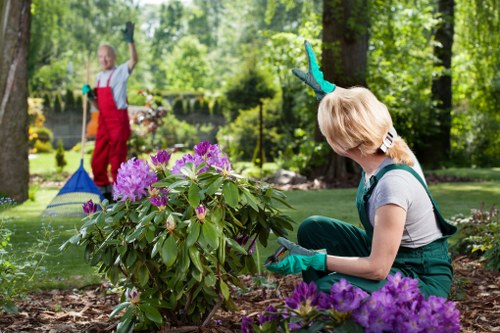 At Hedge Trimming Battersea we believe that professional hedge care should leave gardens healthier and the planet better off. Our approach to eco-friendly waste disposal and sustainable garden rubbish handling is embedded in every job, from small residential hedges to larger community green spaces. We aim to turn garden cuttings and woody debris into resources, not refuse, by prioritising reuse, composting and responsible recycling across the Battersea area.
We work closely with borough-level waste systems and respect the local councils' approach to separation: dry recyclables, food waste, and green garden waste are treated as distinct streams to maximise recovery. By aligning our collections with the local separation programmes used by Wandsworth and neighbouring boroughs, we reduce cross-contamination and boost the capture of organic material for compost and energy recovery.
 Our operational target is clear and measurable: we are committed to achieving a 75% recycling and reuse rate for all garden waste and hedge trimmings by 2027. This recycling percentage target covers material that is turned into compost, chipped for mulch, donated for reuse, or diverted to approved biomass or green-waste facilities rather than landfill. Achieving this depends on careful on-site segregation and the partnerships we maintain across south London.
To make that target realistic we use local transfer stations and civic amenity points that accept separated green waste streams. Where possible we deliver to borough transfer stations and household recycling centres that prioritise composting and anaerobic digestion for green residues. Our logistics team plans drop-offs to facilities serving Wandsworth and nearby Lambeth and Kensington & Chelsea boroughs, reducing haul distances and maintaining the integrity of separated green and woody materials.
 Sustainability also means giving useful materials a second life. We partner with community gardens, school horticulture projects and local charities to donate healthy saplings, established clippings and larger salvageable plantings. These relationships help turn a hedge cut into seedlings or mulch for urban allotments and habitat restoration projects, reducing waste and supporting neighbourhood greenery.
Our work with charities and social enterprises extends to timber and construction offcuts from hedge-support works. Rather than disposing of sound timber, we redirect usable lengths and offcuts to community carpentry schemes and garden-build projects. These collaborations reduce waste volumes, create social value, and support circular-economy outcomes in Battersea and surrounding areas.
We operate a fleet designed for a low-carbon future: electric vans, plug-in hybrids and low-emission Euro 6 vehicles are central to our low-carbon van programme. Route optimisation software minimises mileage and idling, and electric charging points are used wherever possible to lower the carbon footprint of transporting chippings and green waste to transfer stations.
 On-site best practice is straightforward and enforced: separate bulky woody branches from leafy green cuttings, stack brash for local chipping, and keep soil and compostable bags apart from dry recyclables. Our teams use labelled sacks and temporary bins to ensure that every material type follows the correct downstream pathway—composting, chipping, reuse, or recycling—so nothing is inadvertently landfilled.
 We also support borough initiatives that encourage household composting and food-waste separation. By aligning our garden waste services with municipal programmes—such as green-bin collections, communal composting hubs and community-hosted woodchip sites—we amplify local efforts to close the loop on organic waste and improve urban soil health.
Practical sustainability measures we apply
- On-site segregation: clear separation of woody and leafy materials to increase recycling rates.
- Local transfer delivery: prioritising borough transfer stations and household recycling centres that process green waste.
- Charity partnerships: donations of salvageable plants, timber and mulch to community groups and social enterprises.
- Low-emission fleet: electric and hybrid vans, route optimisation and reduced idling.
- Composting and chipping: chippings returned to clients as mulch, or sent to municipal composting and biomass facilities.
How Battersea hedge care meets local waste strategy
Our practical work is informed by the way local boroughs handle waste separation. By matching collection streams to council guidance—keeping organics separate from paper, glass and metals—we ensure that hedge maintenance and Battersea hedge trimming contributes to higher recycling yields. This cooperation reduces contamination rates, improves the quality of compost produced, and supports the wider municipal goals for carbon reduction and landfill diversion.
Hedge Trimming Battersea continues to review and invest in improvements: increased recycling targets, strengthened charity partnerships, and further electrification of our vehicles. By doing so we deliver tidy, healthy hedges while promoting a greener, more sustainable approach to garden waste in the heart of south London.